Greener Comfort: How New HVAC Technology Is Shrinking Your Carbon Footprint
We all want a comfortable home, a cool refuge from the Florida sun, and a warm haven during those occasional chilly nights. But what about the environmental cost of that comfort? Traditional HVAC systems are significant energy consumers, contributing substantially to household carbon footprints. The good news? The HVAC industry is undergoing a green revolution. Here at
Envirotec Heating & Cooling Inc, we're excited about the innovative technologies that are making homes in Bradenton, FL, and beyond both comfortable and eco-friendly.
The Evolution of a Greener HVAC
For years, the basic design of heating and cooling systems remained relatively unchanged. However, with growing environmental concerns and a push for greater energy efficiency, manufacturers have made incredible strides. These advancements not inly help protect our planet but also offer significant savings on your utility bills. It's a win-win for your wallet and the world.
Geothermal Heat Pumps: Tapping into Earth's Energy
Imagine heating and cooling your home using the stable temperature of the earth just a few feet beneath your property. That's the principle behind geothermal heat pumps. These systems use a network of underground pipes to transfer heat. In the winter, they pull heat from the ground to warm your home, and in the summer, they pull heat from your home and transfer it back into the ground.
Geothermal systems are incredibly efficient, with some achieving ratings of 300-500% efficiency, compared to the 95% of even the most efficient conventional systems. This remarkable efficiency can lead to savings of up to 70% on utility bills for heating, cooling, and even hot water. While the initial investment can be higher, the long-term savings and minimal environmental impact make it a compelling choice for homeowners. Plus, the indoor components of these systems can last twice as long as conventional units.
Smart Thermostats: Intelligent Comfort and Savings
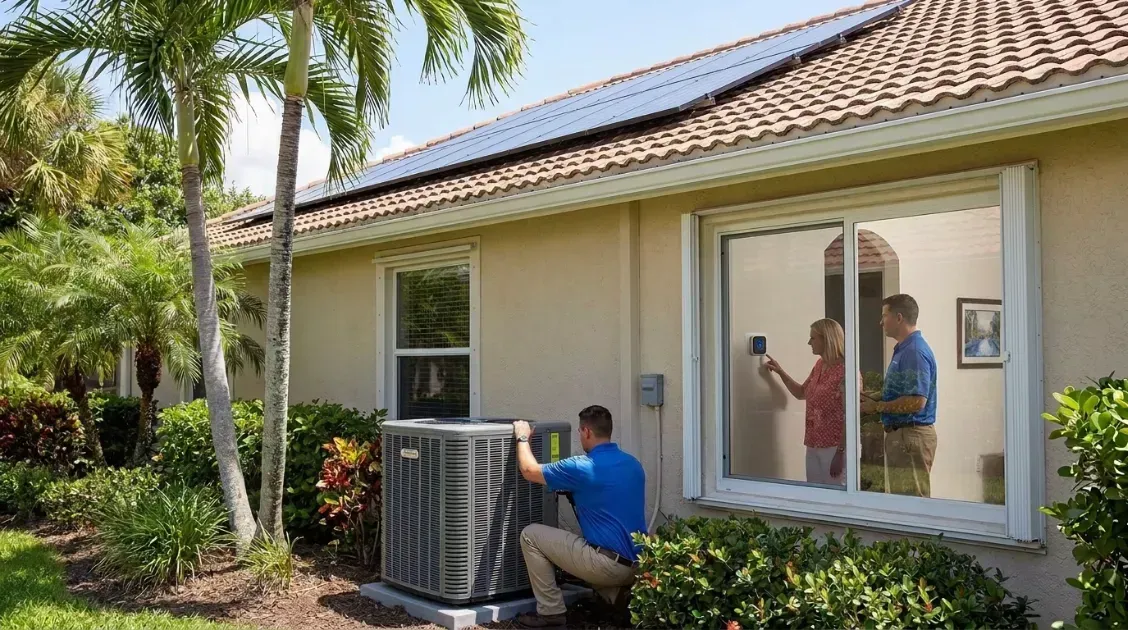
One of the most accessible and impactful upgrades you can make to your HVAC system is installing a smart thermostat. These clever devices go far beyond manual or basic programmable thermostats. By learning your household's patterns and preferences, a smart thermostat can create personalized schedules to optimize energy use.
Many smart thermostats also offer remote access via smartphone apps, allowing you to adjust your home's temperature from anywhere. Some even use geofencing to detect when you're close to home and automatically adjust the temperature for your arrival. By simply turning your thermostat back 7-10°F for eight hours a day, you can save as much as 10% a year on heating and cooling costs.
Eco-Friendly Refrigerants: A Cooler, Cleaner Future
The refrigerant flowing through your air conditioner's coils is a critical component of the cooling process. For decades, older refrigerants like R-22 (Freon) were the standard, but they were found to be harmful to the ozone layer. The industry then shifted to refrigerants like R-410A, which, while better for the ozone, still have a high Global Warming Potential (GWP).
The latest generation of HVAC systems utilizes eco-friendly refrigerants with significantly lower GWP, such as R-32 and R-454B. These newer refrigerants are not only better for the environment but also often lead to improved energy efficiency in the systems that use them. As regulations continue to evolve, with new standards from the U.S. Department of Energy, choosing a system with modern refrigerants is a forward-thinking decision.
High-Efficiency Systems and Heat Pumps
Beyond specific technologies, there has been a significant push towards higher overall system efficiency. Modern air conditioners and furnaces are far more efficient than models from just a decade ago. A key player in this movement is the heat pump. These versatile systems provide both heating and cooling by transferring heat rather than generating it. In the summer, they move heat out of your home, and in the winter, they reverse the process, pulling heat from the outside air to warm your home.
Heat pumps are particularly effective in moderate climates like ours in Florida. They can significantly reduce greenhouse gas emissions by minimizing or eliminating the reliance on combustion-based heating. When you see that ENERGY STAR® label, you can be confident you're choosing a product that meets strict energy efficiency guidelines set by the EPA.
Your Role in a Greener Future
Embracing these new HVAC technologies is a powerful step towards reducing your carbon footprint. At Envirotec Heating & Cooling Inc, we believe in providing our Bradenton neighbors with solutions that are both effective and environmentally responsible. Whether you're considering a new geothermal system, a smart thermostat, or a high-efficiency heat pump, you're making a choice that benefits both your family and the planet.
Ready to explore how the latest in HVAC technology can make your home more comfortable and sustainable? Contact the experts at Envirotec Heating & Cooling Inc today at 941-355-3832 to discuss your options and find the perfect green solution for your home.
Frequently Asked Questions
What is the main benefit of a geothermal HVAC system?
The primary benefit of a geothermal system is its incredible energy efficiency. By using the stable temperature of the earth, it can heat and cool your home using significantly less electricity than conventional systems, leading to major long-term savings on utility bills and a much smaller carbon footprint.
How much can I really save with a smart thermostat?
While savings vary based on your habits and climate, studies have shown that homeowners can save up to 10-20% on their heating and cooling costs by using a smart thermostat's scheduling and energy-saving features effectively.
Do I need to replace my entire HVAC system to use a new, eco-friendly refrigerant?
Yes, in most cases. Newer eco-friendly refrigerants like R-32 and R-454B are not designed to be retrofitted into older systems that use R-410A or R-22. The new refrigerants operate at different pressures and require components specifically designed for them. Upgrading to a new system is necessary to take advantage of these more environmentally friendly options.