Avoid Winter Breakdowns: Smart Tips for Caring for Your HVAC System

Your furnace does not care about your holiday plans. It doesn’t care if you have family coming over for dinner or if it’s three o'clock on a Sunday morning during a record-breaking blizzard. When the mercury drops and the wind starts to howl against the siding, your HVAC system is the only thing standing between a cozy evening and a pipe-bursting nightmare. Most homeowners treat their heating system like a toaster—they expect it to work every time they push the button. But a furnace or a heat pump is a complex machine, not a simple appliance. It requires respect, maintenance, and an understanding of the physics that keep your home habitable.
The High Cost of Procrastination
Ignoring your heating system in the fall is a gamble with high stakes. You might win. You might make it through February without a hitch. But the odds are stacked against you. Systems that haven't been touched in six months are prone to mechanical failure the moment they are pushed to their limits. When you finally crank that thermostat to 72 degrees on the first frost, you are asking a dormant machine to perform at peak capacity instantly. This is when capacitors blow. This is when igniters crack. This is when your wallet takes a hit that could have been easily avoided.
Finding a reliable local hvac expert during a cold snap is like trying to find a quiet spot at a rock concert. Everyone is calling at once. Wait times stretch into days. Emergency rates apply. By taking proactive steps now, you bypass the chaos. You ensure that your family stays warm while your neighbors are huddled around space heaters waiting for a technician to show up. It starts with a simple mindset shift: maintenance is an investment, not an expense. You can visit Our Homepage to see how we approach total home comfort and why we emphasize prevention over frantic repairs.
The Silent Killer: Airflow and Your Filters
If you want to kill your HVAC system, starve it of air. It’s the most effective way to ensure a premature death for your blower motor and heat exchanger. Air filters are the primary defense against the dust, dander, and debris that naturally circulate through your home. When a filter becomes clogged, the system has to work twice as hard to pull air through the return. This creates static pressure. High static pressure leads to overheating. In a gas furnace, this might trigger the limit switch, causing the system to shut down for safety. In a heat pump, it can lead to coil icing and compressor failure.
Don’t buy the cheapest fiberglass filters you can find. They are basically "rock catchers" that let fine dust pass right through into the sensitive internal components. On the flip side, be careful with high-MERV pleated filters. While they provide excellent air quality, they can also be too restrictive for older systems. You need a balance. Check your filter every thirty days. If you have pets or live in a dusty area, you might need to change it every month. If you’re unsure which filter matches your specific equipment, consulting with HVAC system experts can prevent you from accidentally choking your machine. You can explore Our Main Services to see how we evaluate airflow as part of our comprehensive seasonal tune-ups.
Thermostat Wisdom and Calibration
Your thermostat is the brain of the operation. If the brain is confused, the body suffers. Many homeowners assume that if the display says 70, the room is 70. That isn't always the case. Thermostats can lose calibration over time. Dust can settle on the sensors. If it’s mounted on an exterior wall or near a drafty window, it will give false readings, causing your furnace to cycle on and off too frequently. This "short cycling" is a mechanical death sentence. It wears out the start-up components and wastes a staggering amount of energy.
Upgrade to a smart thermostat if you haven't already. These devices do more than just let you change the temperature from your phone. They track run times and can alert you when the system is struggling to reach the set point. However, don't over-program it. Dropping the temperature by fifteen degrees when you go to work sounds smart, but your system has to work incredibly hard to recover those degrees when you get home. A modest five-degree setback is usually the "sweet spot" for efficiency without overtaxing the hardware. We’ve spent years perfecting these configurations, and you can learn more About Us and our commitment to energy-efficient solutions that actually work for real families.
The Physics of the Heat Pump
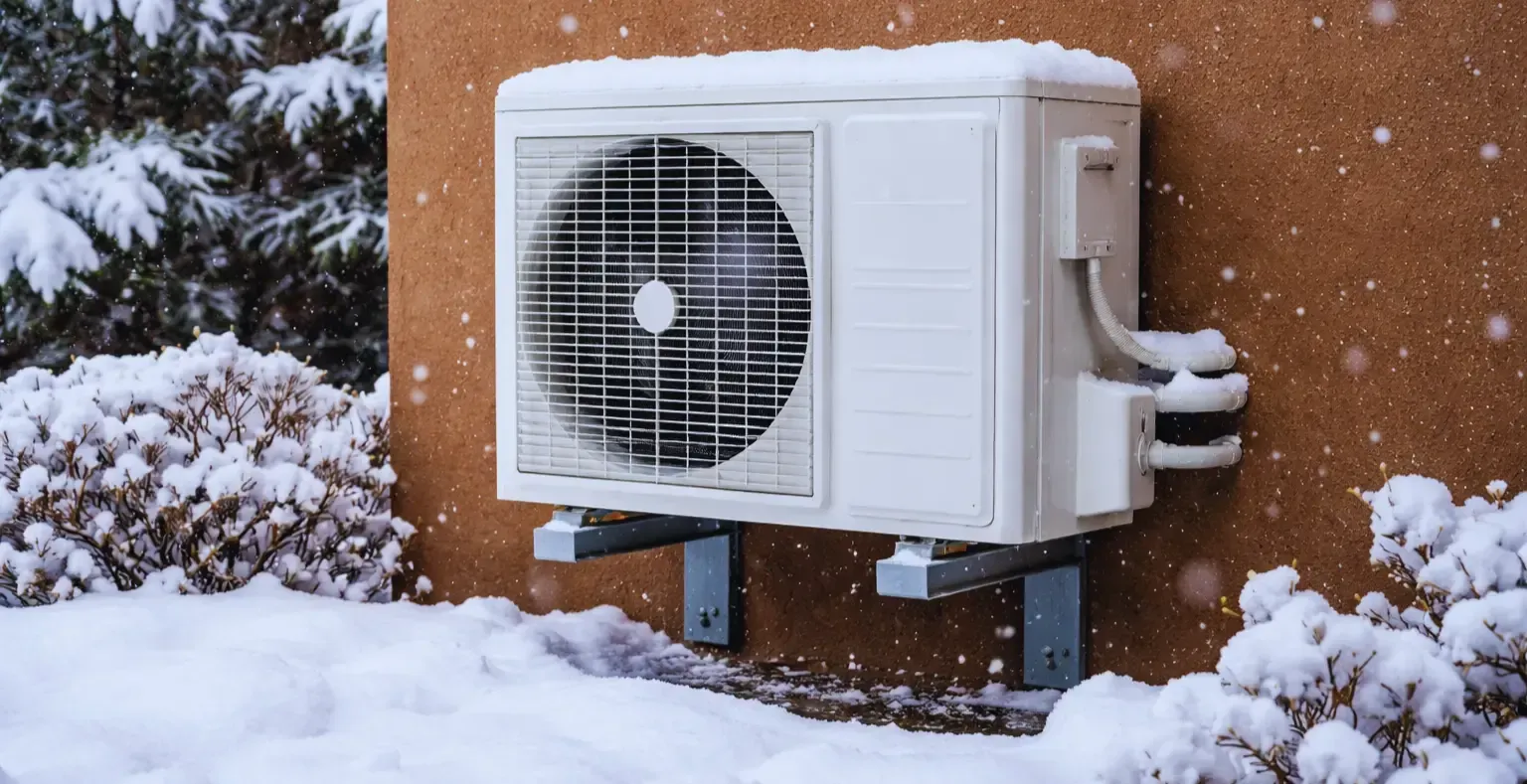
If you have a heat pump, winter maintenance is a different beast entirely. Unlike a gas furnace that generates heat through combustion, a heat pump moves heat from the outside air into your home. Even when it’s 30 degrees outside, there is heat energy available. But this process leads to frost buildup on the outdoor coils. Your system is designed to handle this through a "defrost cycle," where it temporarily reverses into cooling mode to melt the ice. If you see steam rising from your outdoor unit, don't panic. That’s normal.
What isn't normal is a solid block of ice encasing the entire unit. This happens when the defrost board fails or the refrigerant levels are low. If you notice your outdoor unit looks like an igloo, turn it off and call a local hvac expert immediately. Running an iced-over heat pump will destroy the fan motor and the compressor. Keep the area around the outdoor unit clear of snow, ice, and fallen leaves. Air needs to move freely through those fins. If the unit is buried in a snowbank, it can't breathe. It can't extract heat. It becomes a very expensive lawn ornament.
Ductwork: The Veins of Your Home
You can have the most expensive, high-efficiency furnace on the market, but if your ducts are leaking, you are literally heating your crawlspace or attic. The Department of Energy estimates that the average home loses 20% to 30% of its conditioned air through leaks and poor connections in the ductwork. This is wasted money. In the winter, these leaks also pull cold, unconditioned air into the system through a process called the "stack effect." This forces your furnace to run longer and hotter to compensate for the infiltration.
Inspect your visible ducts. Look for disconnected sections or holes. Don't use "duct tape"—ironically, it’s terrible for ducts. Use foil tape or mastic sealant. Even better, have a professional perform a pressure test. We often find that a simple duct sealing project can improve comfort more than a brand-new furnace ever could. It’s about the whole system, not just the box in the basement. If you suspect your home has hot and cold spots that don't make sense, please Contact Us so we can perform a thermal imaging scan of your distribution system.
The Critical Role of Professional Maintenance
DIY tips are great for the basics, but there are things a homeowner simply cannot—and should not—do. Combustion analysis is one of them. A local hvac expert uses specialized tools to measure the gases leaving your chimney. We look for carbon monoxide levels and oxygen mixtures. If the combustion isn't "clean," you are wasting fuel and, more importantly, risking your life. A cracked heat exchanger is often invisible to the naked eye, but it can leak deadly CO into your living space.
During a professional tune-up, we also check the electrical draw of your motors. A motor that is pulling too many amps is a motor that is about to seize. We lubricate moving parts, tighten electrical connections that have loosened due to vibration, and clean the flame sensor. A dirty flame sensor is the number one cause of "no-heat" calls. The system starts, the flame appears, but the sensor is too covered in soot to "see" it, so it shuts the gas off for safety. Ten minutes of professional cleaning can save you a $300 emergency service call on Christmas Eve. HVAC system experts see these patterns every day and know exactly where the weak points are in every major brand.
Moisture and Drainage Issues
Wait, moisture in the winter? Yes. High-efficiency furnaces (90% AFUE and above) are "condensing" furnaces. They extract so much heat from the exhaust gases that the water vapor in the exhaust turns back into liquid water. This water needs to go somewhere. It drains through a PVC pipe into a floor drain or a condensate pump. In the winter, if your drain line runs through an unheated space like a garage or a crawlspace, it can freeze. When the line freezes, the water backs up into the furnace. Modern systems have sensors that detect this and will shut the system down instantly.
If your furnace stops working and you see water pooling around the base, you likely have a drainage issue. Keeping these lines clear and insulated is a small detail that prevents massive headaches. Similarly, if you have a whole-home humidifier attached to your HVAC system, winter is its time to shine. But it needs a new water panel every year. Clogged humidifier pads become breeding grounds for mold and can actually cause mineral deposits to build up inside your furnace cabinet. It’s all connected.
Creating a Winter Safety Zone
Safety isn't just about the machine; it's about your home’s environment. Keep flammable materials—paint cans, gasoline, old rags—far away from your furnace. The "mechanical room" should not be your primary storage closet. Your furnace needs a certain volume of "combustion air" to burn fuel safely. If you crowd it with boxes and holiday decorations, you might starve it of oxygen, leading to incomplete combustion and carbon monoxide production.
Install carbon monoxide detectors on every level of your home, especially near sleeping areas. Test them monthly. If a CO alarm goes off, do not ignore it. Do not assume it's a "bad battery." Open the windows, get everyone out of the house, and call the fire department and your local hvac expert. We at Envirotec take these calls with the highest priority because we understand the gravity of the situation. Your family’s safety is the one thing we never compromise on.
The Envirotec Standard
At Envirotec, we don't just fix heaters. We manage indoor environments. We’ve built our reputation on the idea that every home is a unique ecosystem. What works for a ranch-style house in the suburbs won't work for a three-story Victorian downtown. Our team of HVAC system experts is trained to look at the big picture. We evaluate your insulation, your windows, your ductwork, and your lifestyle before we ever recommend a repair or a replacement.
We believe in transparency. When we perform a winter inspection, we show you the readings. We explain the "why" behind our recommendations. Whether you need a simple filter change or a complex heat pump overhaul, we treat your home with the same care we’d treat our own. Don't wait for the first blizzard to find out your system isn't up to the task. Take control of your comfort today. Check out About Us to see the faces behind the service and why our community trusts us to keep the lights on and the heat running.
Frequently Asked Questions
How often should I have my HVAC system serviced for winter?
You should schedule professional maintenance once per year, ideally in the late summer or early fall. This allows a local hvac expert to identify potential failures before the high-demand season begins. Regular tuning ensures maximum efficiency, maintains your manufacturer's warranty, and significantly extends the overall lifespan of your equipment.
Why is my furnace making a loud banging noise when it starts?
A loud bang, often called "delayed ignition," occurs when gas builds up before the igniter catches. This can be caused by dirty burners or a faulty pilot assembly. It is a serious issue that can damage your heat exchanger. You should contact HVAC system experts immediately to prevent a dangerous mechanical failure.
Can I leave my heat pump on during a snowstorm?
Yes, heat pumps are designed to operate in snow, provided the outdoor unit is not physically buried. The system will automatically enter defrost mode to melt ice on the coils. However, ensure that snow doesn't block the top fan or the sides, as restricted airflow will cause the system to shut down.
What is the best temperature to set my thermostat in winter?
For most homes, 68 degrees Fahrenheit is the ideal balance between comfort and energy savings. If you are away, dropping the temperature to 63 or 64 degrees can save money without forcing the system to work too hard to recover. Avoid turning the heat off completely, as this risks frozen pipes.